FAA Ground Stop Halts US Flights for 5 Hours, 827 Diverted
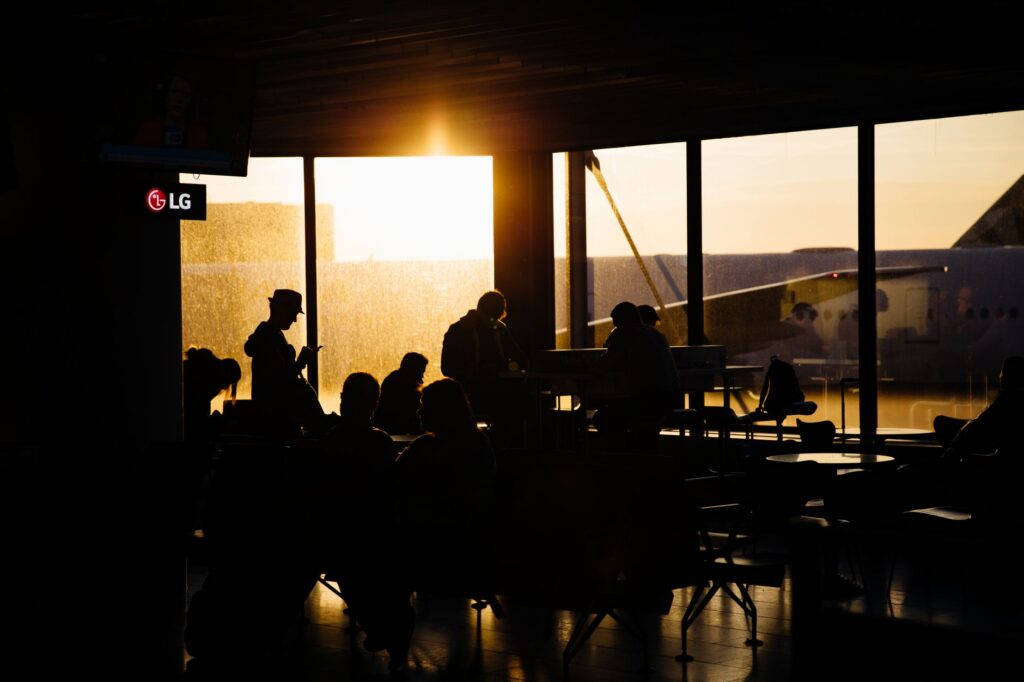
The Federal Aviation Administration stopped nearly all departures across the United States for five hours on Friday, Nov. 13, after a failure in the air traffic control system left regional control centers with intermittent communications and gaps in radar coverage, Trump administration officials said. The FAA lifted the ground stop on Friday night. According to the Associated Press, it was the longest nationwide ground stop in 25 years.
Officials expect it to take days for airlines to recover, because many planes and crews ended up in the wrong cities. A limited number of domestic flights started leaving on Friday evening.
What failed in the air traffic control system
Homeland Security Secretary Markwayne Mullin said the agency had been installing new equipment and technology and that it was “overwhelming the older system,” the AP reported. Officials said the trouble caused communication drops and radar gaps at regional air traffic control centers. Earlier, the FAA said it had ordered the stop “due to extraordinary circumstances and for reasons of safety.”
Mullin said investigators were still searching for the exact cause. Earlier on Friday he said they would look at whether the outage was connected to the FAA’s nationwide rollout of a new artificial intelligence system that helps spot problems and reroute planes. That system runs from a single site near Washington, D.C., and only sends recommendations to control centers.
Asked whether a cyberattack could be ruled out, Mullin said nothing was completely certain yet. He said there were no “footprints” of an attack and that the failure appeared to be mechanical. Transportation Secretary Sean Duffy said he could not guarantee it would not happen again.
How many flights and passengers were affected
Duffy said 3,500 aircraft were in the air when the stop began, and fewer than 400 were still flying later. Mullin said more than 3,000 flights landed safely and nobody was in danger.
- At least 827 flights were diverted, according to aviation analytics company Cirium.
- As of 7:05 p.m. EST, 670 of them had gone back to their departure airport and 157 had landed somewhere else, Cirium said.
- About 11,000 flights with more than 1.5 million passengers were scheduled to depart after 4 p.m. EST.
Washington Dulles, Los Angeles International, Cincinnati/Northern Kentucky and Nashville were among the airports that took in many of the diverted planes. At Chicago O’Hare, travelers found out about the stop when departure screens filled with delays, and some said they were getting little information from airlines.
NBA, NHL and college teams were stranded on the way to games. Duffy said NCAA football teams would get priority before Saturday’s games and asked them to contact the FAA to schedule flight times. Cargo flights were hit too. FedEx said it was ready to activate contingency plans to limit disruption.
Why it matters for travelers
This was only the second nationwide ground stop since the aftermath of the Sept. 11, 2001, attacks. The other came in January 2023, when an important FAA computer system malfunctioned. Officials said they expect operations to be back to normal before the Thanksgiving travel rush.
Friday’s failure looked similar to a regional air traffic control communication outage in September that disrupted hundreds of flights in the Northeast. That one was blamed on a construction crew that cut a fiber optic line. Aging equipment was also blamed for short radar outages last year that disrupted Newark airport.
Aviation safety expert Steve Arroyo, a former United Airlines pilot, said the nationwide scale made this event different, because controllers could not reliably talk to pilots. He said that when that link is lost, planes have to stay on the ground. Unlike the stop after 9/11, planes in the air were not ordered to land immediately.
What happens next with the FAA upgrade
Congress approved $12.5 billion last year to replace outdated air traffic control technology. Miles of copper wire have been swapped for fiber optic lines, and airports are gradually getting new radio systems. Duffy has said another $30 billion is needed, and the White House has started lobbying Congress to approve it.
Source: The Siasat Daily